
Are we just filling space with tech in classrooms?
The SAMR Model – As I looked further into assistive tech, I found the SAMR model (substitution, augmentation, modification, and redefinition model) to be a great way to break down tech use. Dr. Ruben Puentedura came up with this model, outlining how we can incoorporate tech into our classrooms. There are the four steps, and these four steps are divided in two categories: Enhancement and Transformation.
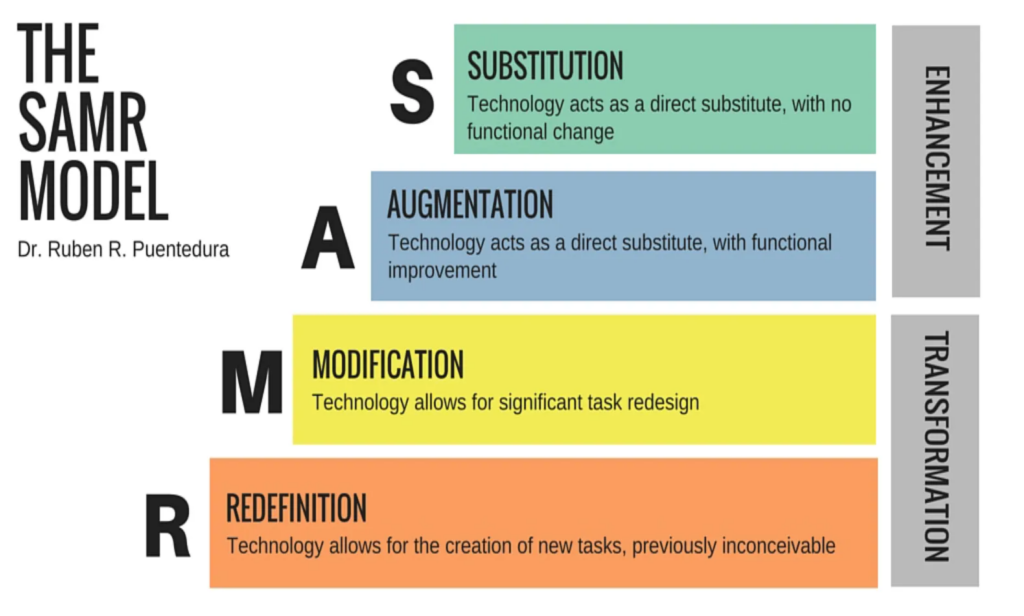
Enhancement vs. Transformation
- Subsititution and augmentation enhance a lesson by giving students a new mode to explore, or additional tools at their disposal. An example I think of is is French language learning, allowing students to use a tool such as Antidote where they can reflect on their grammar. When I was in school, this tool was introduced to us and we learned not just how to copy and paste our work in, but how to assess it critically in order to assure we were using the correct suggestions from the app.
- Modification and redefinition transform a lesson by taking it to the next level: maybe something that only the incoorporation of tech can do. When I think of these types of transformations, the first thing that comes to mind is local live ocean cam resources such as Ocean Networks Canada. ONC has live cameras underwater, access to footage and audio, as well as more advanced resouces such as access to raw data that can be used in computer coding classes.
Triple E Framework – The triple E framework is a way of evaluating if a resource truly is going to benefit learning. Dr. Liz Kolb’s model uses the three E’s:
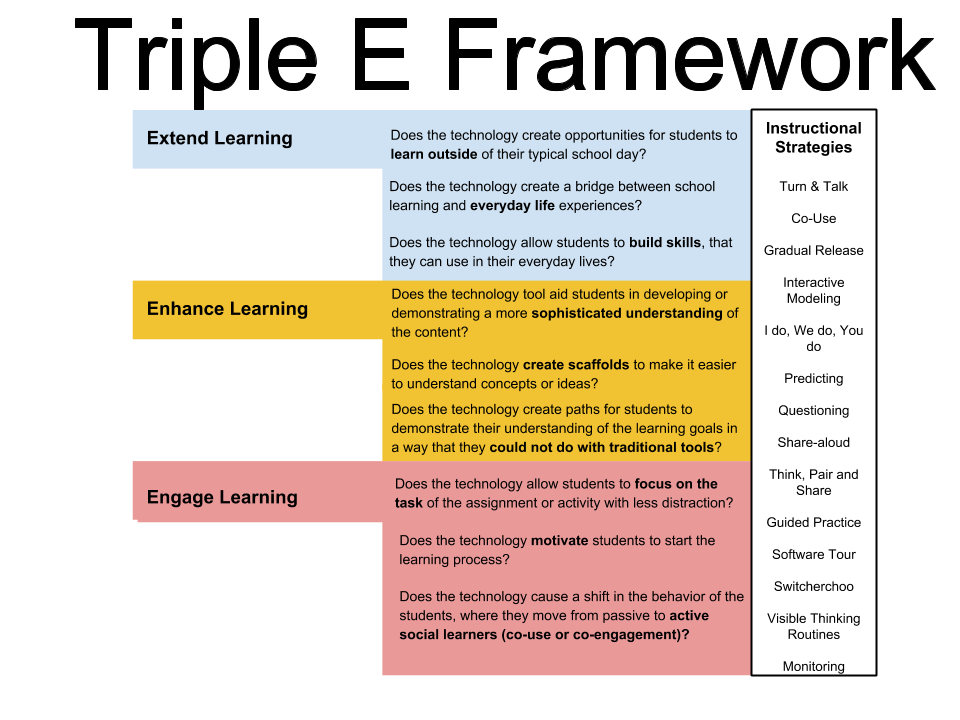
- Engage – are we allowing students to engage with material, remain engaged, focus on the task, increase motivation, work collaboratively?
- Enhance – are students deepening their understanding, building up to bigger ideas, funneling their knowledge to show them “the point” in what they are learning?
- Extend – are we showing students where this learning will take them, how it crops up in their day-to-day life, building skills they can use broadly? 3
The Triple E Framework wesbite has resources, which also invclude a rubric that teachers can use to evaluate if their lesson plan is using the Triple E Framework adequately:
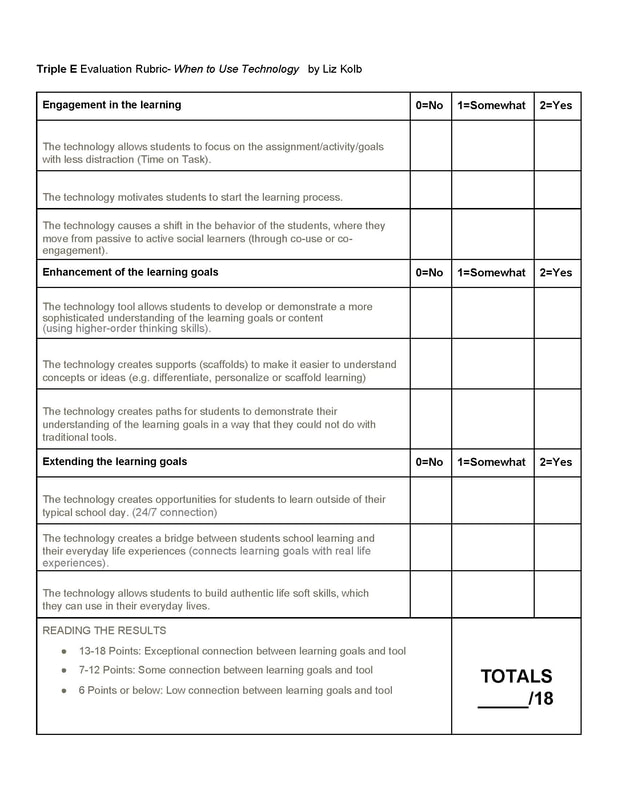
This is a fantastic tool to use as a reflection when lesson planning, to ensure we aren’t just throwing tech tools around in our classrooms and lesson plans “for fun” or to fill space. Being intentional with tech tools allows us to ensure we continue the learning process even with outside tools. Often it may seem easier to gie students a video to watch, an online simulator to engage with, etc., but reflecting on it’s purpose is vital. Is it really more engaging with this simulator, or is it something I can demonstrate in class on a smaller scale? Maybe both! Do the demo on a small scale in front of them, and then have them engage to extend their knowdlege using a tech tool.
As I read about and watched videos about these two models, I started to brainstorm some ways I can see using tech to fulfil these frameworks, in my future classrooms:
- Collaborative writing (google docs) for writing lab reports for live peer feedback
- Virtual field trips for arctic and ocean research
- Backchannels during lessons
- Inviting experts to speak midway through units after using virtual field trips/their data for scientific interpretation
- Project proposals for real-time issues in our neighbourhoods (composting initiatives, new community centre activities, environmental concersn) which can lead to members of community coming to hear pitches
In the end, and maybe I say this every time, there is a beautiful balance we are trying to achieve: how do we balance tech and non-tech tools in our classrooms? How do we make the integration authentic? How do we create resources for students who can benefit from tech? That’s the fine line I’m hoping to explore more through my practicums!