
First Stop: Northern Italy
With boarding passes ready, passports in hand, and a palate ready to be refined, the first stop on my wine tasting journey is Northern Italy. Not a bad place to start, especially considering Italian culture when it comes to wine. When my classmate Shae (who also happens to live across the street from me) invited me over for dinner, I knew this had to be my weekly wine tasting.

Gnocchi is a classic in Italian cuisine, and well loved by myself. Gnocchi is to nonas as perogies are to my baba; every culture needs that potato dumpling in some form. I did a shallow dive into the history of gnocchi, and it seems like there is reason to believe the recipes originated in Northern Italy. So that’s where we’ll begin… (for more on the history of gnocchi, see Shae’s blog!)
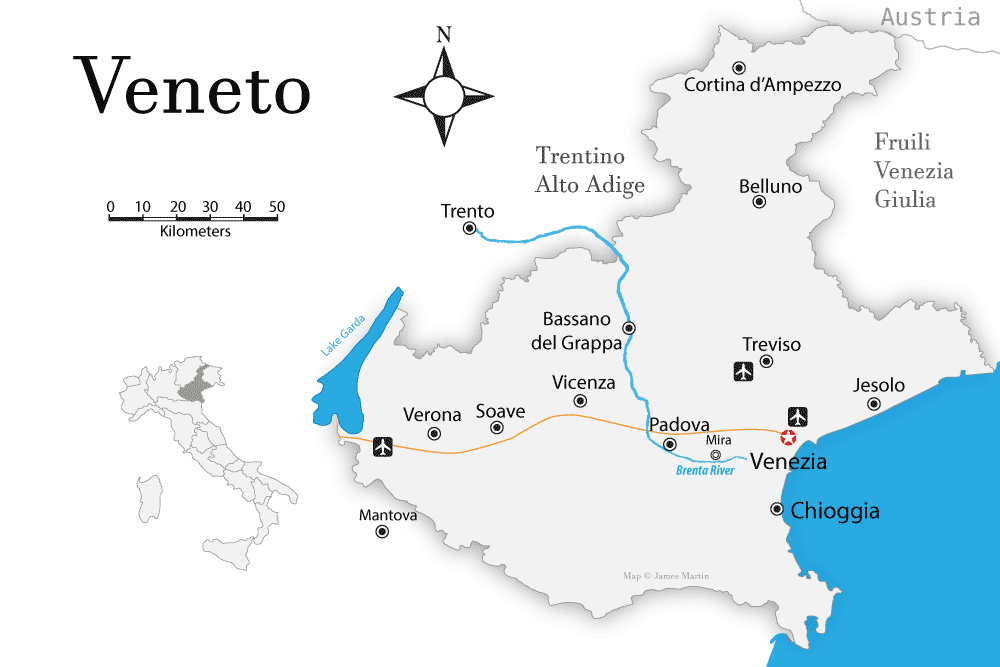
After my dive into gnocchi and learning about Northern Italy, I did a dive into the wine regions of Northern Italy. I decided to go with the Veneto Region, one of Italy’s top wine producing regions and located in North Eastern Italy 2. Veneto may be familiar to some as the place where pinot grigio is produced, and actually the reason Veneto became an industrial wine producer. In the 1960s wine production in Italy for the United States and Great Britain, helped launch this region into it’s industrial ways.
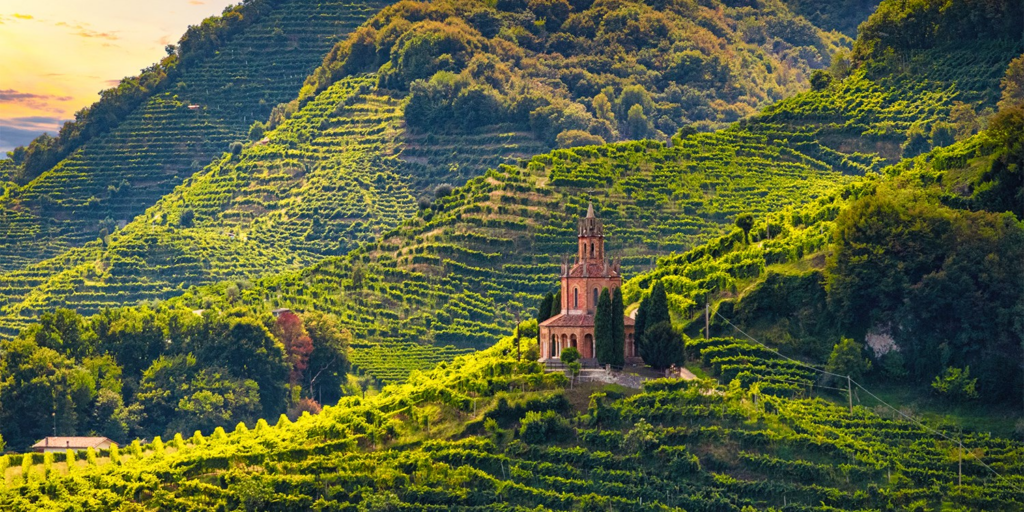
Geographically, Veneto is known as having fertile plains extending from the Adriatic sea to the Alps, with rivers running throughout. As crops do tend to thrive in sun drenched plains, grapes are no different. But even more, Veneto is known for having vineyeards on steep hills, where the soil is of volcanic origin and has sand, gravel and clay makeup 3. Why would vines want to grow on hillsides? So many famous and sought after grapes are from vineyards that utilize steep slopes, rocky mountain sides and terrain that to an untrained wine drinker would be deemed not to pleasant. However, over time it has been found that some vines thrive in these types of environments due to the immense drainage of the soil, uninterrupted exposure to sunlight, and less nutrient competition with other vegetation 4.
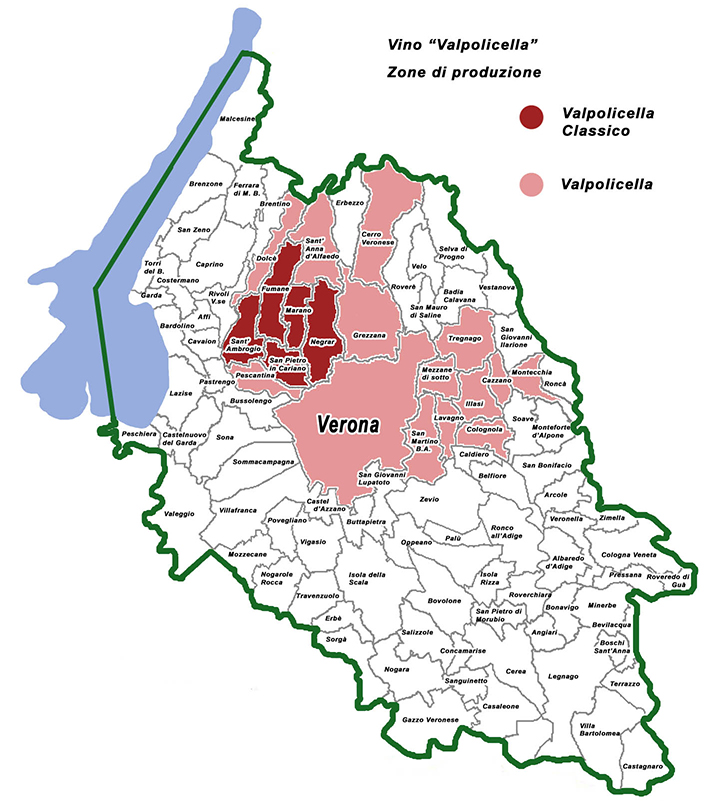
I chose the Valpolicella region, which is near Verona. In this region, there are a few different wines produced. Amarone, Valpolicella and Bardolino. For this gnocchi dinner, I chose a valpolicella wine (I was going to choose an Amarone because the production method had be captivated, however the prices listed at BC Liquor store were quite outside of my typical wine budget.)
When thinking of the different wines of this region, I found this youtube video to be quite useful and descriptive.
Some key facts about valpolicella wine 7:
- Three key grapes are used: Corvina Veronese, Rondinella, and Molinara
- There are grades of valpolicella, all dependent on fermentation processes, flavours, and grape quality
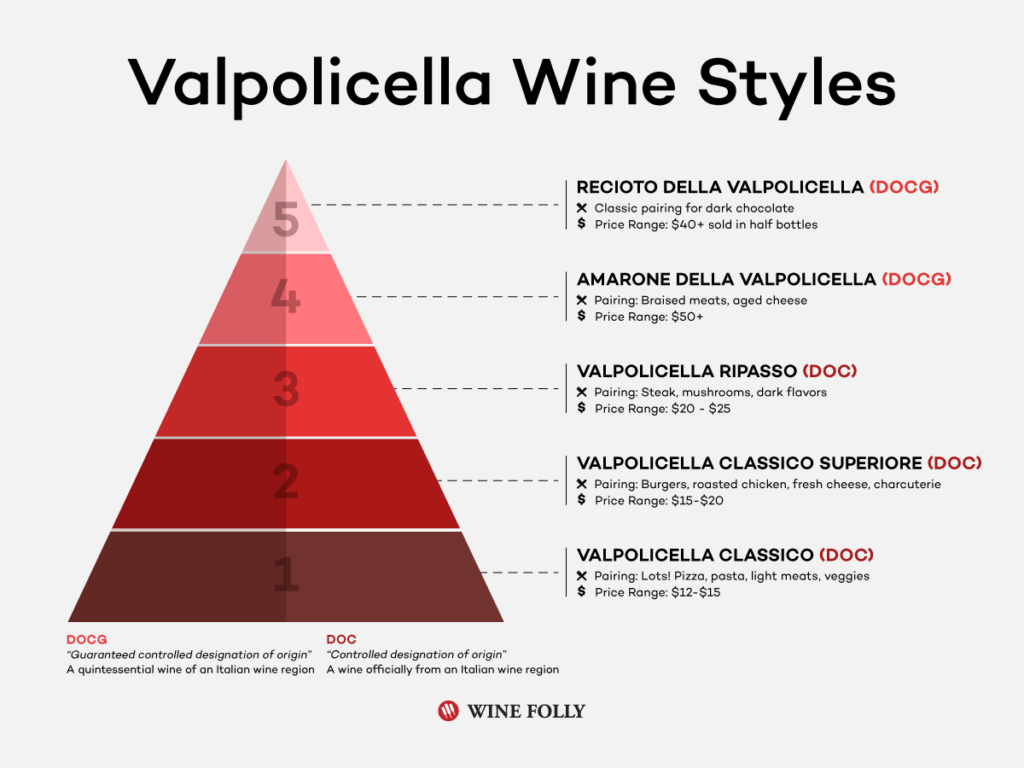
As a girl who loves a red wine (at a good price point), Valpolicella Ripasso seemed like my best option. The Valpolicella Ripasso is produced as an art:
According to Christine Marsiglio (Wine Folly): “producers take the partially fermenting skins from Amarone production and they add them to Valpolicella Classico wine and let the skins macerate for a while. This adds more flavour, tannins, a bit of alcohol and body too – resulting in Valpolicella Ripasso.“ 8
Often classified as the younger brother to the Amarone, and is known to have a jam-like flavour to it often familiar to the Zinfandel wines of Croatia 9.
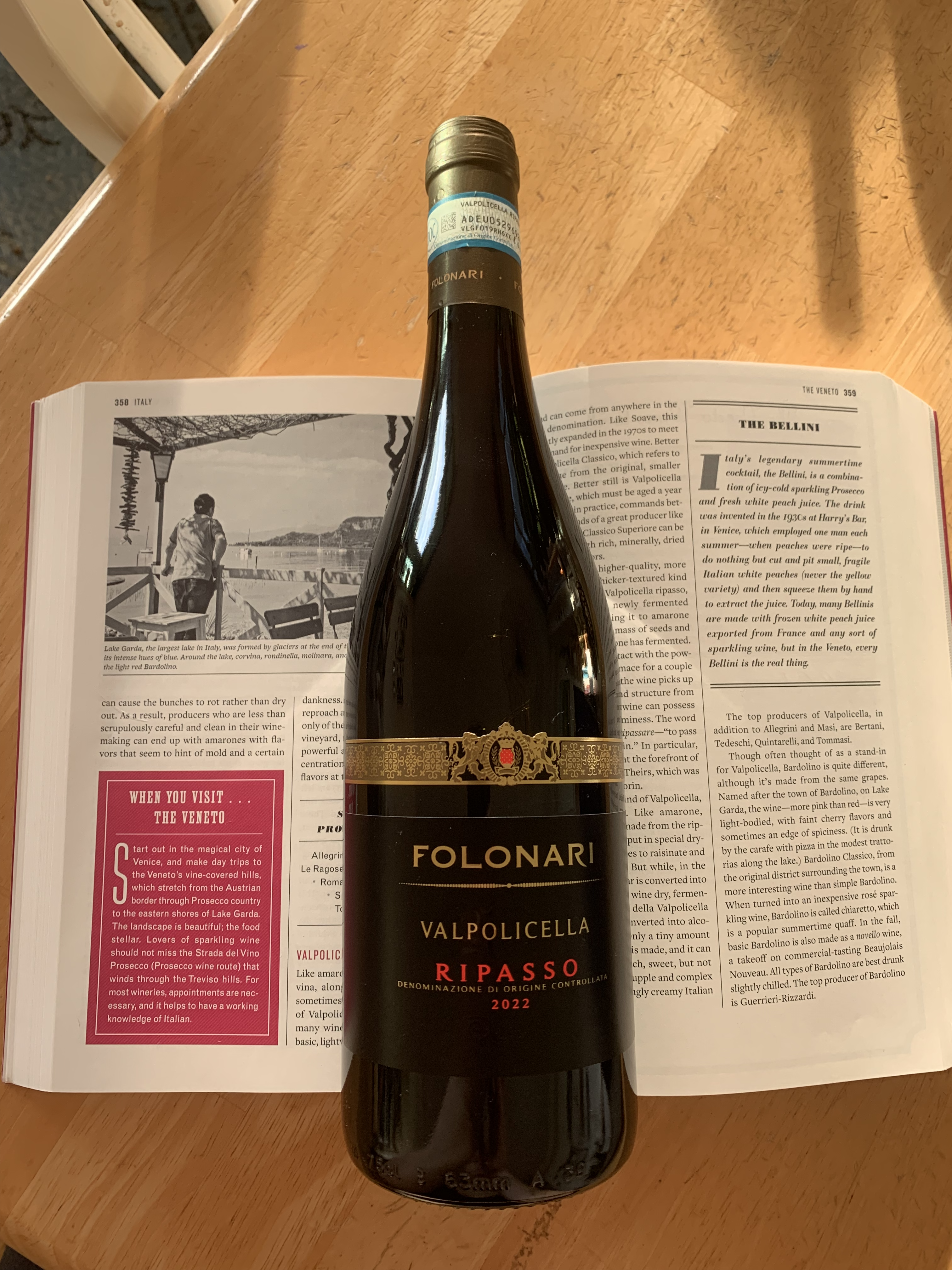
So here’s where the search began. A quick google search to assure that BC Liquor carried a Valpolicella Ripasso (within my budget), and then I was off to the races. I picked up a Folonari Valpolicella Ripasso 2022 from BC Liquor. The producer, Folonari, has a bit of information in their ‘about us’ section of their website:
Folonari was founded in 1825 in the Veneto region of northeast Italy by Francesco Folonari. From the very beginning, the founders wanted to create exceptional wines for everyday occasions. 10
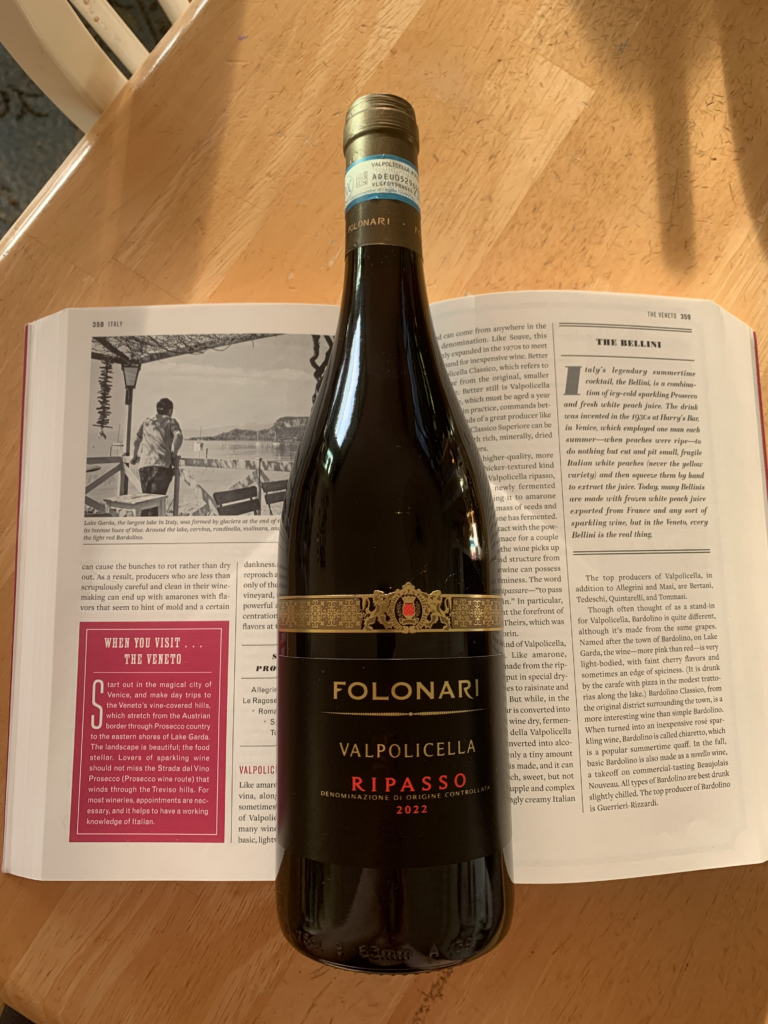
When looking up this bottle online, I read through the tasting notes that BC Liquor, Société des alcools du Québec, and Newfoundland Laborador Liquor Coorporation, had listed. Some tasting notes I was on the lookout for in this bottle:
- ripe plums
- soft berries
- subtle spice
- cherry
- cocoa
- mocha
- dried black fruits
Plums, cherries, dark fruits and jam-like flavours came through! I found the wine to be quite full-bodied, where the taste lingers. I really enjoyed it!


As a first wine to try, I’m quite excited that this one was it. A wine I wouldn’t normally have tried, pairing with food, and sharing the experience with a friend, all comes together to make for a great first step in my inquiry project.
Would I drink it again? I bought another bottle and shared it with friends the following night.
You can read Shae’s blog about gnocchi making, here!